

NVOCC vs Freight Forwarder: What's the Difference?
For importers choosing an ocean freight provider: who acts as the carrier, who gets priority space when capacity tightens, and what to verify before you sign.
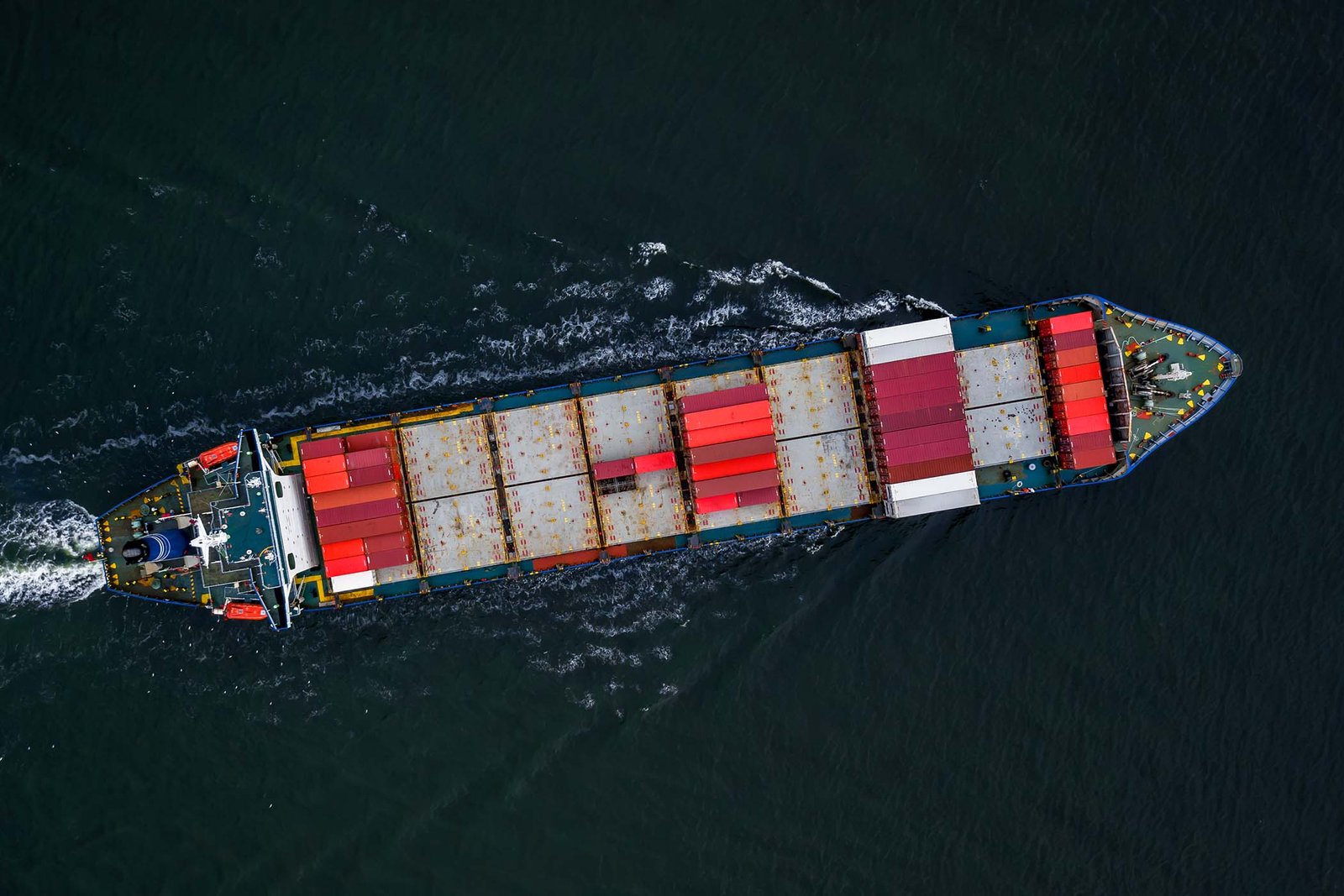
In the NVOCC vs freight forwarder comparison, the key difference is who acts as the carrier. An NVOCC issues its own house bill of lading and takes carrier responsibility for your cargo. An ocean freight forwarder books and documents shipments as your agent. Both are FMC-licensed, but only NVOCCs can hold carrier-style capacity.
Key takeaways
- Both roles are Ocean Transportation Intermediaries licensed by the Federal Maritime Commission. An NVOCC acts as a carrier; an ocean freight forwarder acts as the shipper's agent.
- An NVOCC issues its own house bill of lading and is responsible for the cargo as a carrier, even though it does not operate vessels.
- Financial responsibility differs: $75,000 for U.S.-based NVOCCs, $50,000 for ocean freight forwarders, and $150,000 for unlicensed foreign-based NVOCCs that register with the FMC.
- The capacity advantage comes from an NVOCC's service contracts with ocean carriers, not from the license alone, so ask which carriers your provider actually contracts with.
- Many logistics companies hold both licenses. That combination, plus in-house customs brokerage, lets one provider manage booking through clearance.
The terms freight forwarder and NVOCC get used interchangeably in logistics. They are not the same thing, and the difference becomes obvious the moment ocean capacity gets tight. This guide explains the NVOCC vs freight forwarder distinction, why it matters operationally, and what to ask before you choose a provider.
What does an ocean freight forwarder do?
An ocean freight forwarder organizes international shipments on behalf of importers and exporters. It books carrier space, prepares shipping documents, coordinates customs clearance, and arranges delivery, acting as your agent rather than as the carrier.
In the U.S., ocean freight forwarding is a licensed activity. The Federal Maritime Commission classifies both ocean freight forwarders and NVOCCs as Ocean Transportation Intermediaries (OTIs), and a U.S.-based forwarder needs an FMC license. What a forwarder does not do is act as a carrier. It books space with ocean carriers or with an NVOCC on your behalf, and it does not issue its own ocean bill of lading as the carrier. In normal markets, this works well. The problem surfaces when the market is not normal.
What is an NVOCC?
An NVOCC, or Non-Vessel Operating Common Carrier, is a company that acts as an ocean carrier to its customers without operating ships. It accepts cargo, issues its own house bill of lading, and takes carrier responsibility for the goods, while buying vessel space from ocean carriers such as Maersk, MSC, Evergreen, and COSCO.
The "non-vessel operating" part means the NVOCC does not run the ships. The "common carrier" part means it holds itself out to the public as a carrier and is responsible for cargo in its care. An NVOCC can sign service contracts with vessel-operating carriers as the shipper, committing to a volume over a contract period, usually a year, in exchange for rates and space on specific services. That contracted space is what gives an NVOCC its capacity advantage.
Beyond Logix is FMC-licensed and NVOCC-certified, which means we hold direct contracts with major ocean carriers, not just access to space through an intermediary. The core difference is that an NVOCC acts as a carrier and a freight forwarder acts as an agent. That shapes who issues the bill of lading, who carries liability, what bond the FMC requires, and whether the provider can hold carrier service contracts that secure space when the market tightens.
| Factor | Ocean freight forwarder | NVOCC |
|---|---|---|
| Role | Acts as the shipper's agent | Acts as a carrier to the shipper |
| FMC status | Licensed OTI (ocean freight forwarder) | Licensed OTI, or registered if foreign-based |
| Financial responsibility | $50,000 | $75,000 (U.S.-based); $150,000 (unlicensed foreign-based) |
| Bill of lading | Does not issue its own ocean bill as carrier | Issues its own house bill of lading |
| Carrier contracts | Books on your behalf with carriers or NVOCCs | Can sign service contracts with ocean carriers as the shipper |
| Pricing to you | Service fees | Published tariff rates, NRAs, or NSAs |
| Best fit | Arranging and documenting shipments | Regular ocean volume that needs dependable space |
Bond amounts come from the FMC's bond program for OTIs. The table describes the typical U.S. setup, and many companies hold both licenses at once.
Source: FMC bond program for OTIs (2026)
Why does capacity control matter so much?
Capacity control matters because ocean carriers prioritize their contracted customers when space gets tight. During peak season or a disruption, providers with service contracts draw on allocated space, while providers without them compete for leftover space, and their clients are the ones most likely to get rolled to a later sailing.
Peak season on Asia-U.S. lanes typically runs from about August through October, as importers stock ahead of the holidays. Port strikes, canal disruptions, and demand surges like 2021 and 2022 have the same effect: available space evaporates. A provider without contracted capacity is left calling partners for space. Its clients may be rolled a week or two, and production schedules and customer commitments slip.
An NVOCC with service contracts pulls from its allocation instead. That priority is real, but it is not an absolute guarantee. In severe disruptions, carriers can still squeeze allocations, which is why it pays to ask how a provider protected bookings in past crunches. If you hear "we couldn't find equipment," it usually means your provider was relying on the spot market, and the spot market dried up.
Shippers also have more protection than they once did. The Ocean Shipping Reform Act of 2022 led the FMC to adopt rules on carriers' unreasonable refusal to deal and a charge-complaint process for disputing fees, as described on the FMC's OSRA updates page.
How does NVOCC pricing work?
NVOCCs negotiate rates with ocean carriers at the contract level, buying in volume on terms a single importer usually can't get, and then price services to customers above those rates. For many importers, that produces better rates and more stable space than going to a carrier directly, which many carriers won't offer smaller shippers anyway.
NVOCCs must publish a tariff, and they can also offer customers negotiated rate arrangements (NRAs) or NVOCC service arrangements (NSAs) instead of tariff rates. The tradeoff is that you commit to a vendor relationship instead of spot-shopping every shipment. For importers with regular volume, rate stability and dependable capacity are usually worth more than an occasional spot deal.
NVOCCs also pass along demurrage and detention charges from carriers and terminals. Under FMC rules in effect since May 2024, an NVOCC must invoice those charges within 30 days of receiving the carrier's invoice, according to HFW's summary of the FMC demurrage and detention rule.
What does an FMC license require?
An FMC license requires a qualifying individual with at least three years of OTI experience, proof of financial responsibility, and, for NVOCCs, a published tariff. U.S.-based NVOCCs post $75,000, ocean freight forwarders post $50,000, and unlicensed foreign-based NVOCCs that register instead post $150,000.
- Qualifying individual. According to the FMC's licensing requirements, a qualifying individual must have at least three years of OTI experience and be an officer, owner, or partner of the business.
- Financial responsibility. The bond, insurance, or other surety protects shippers if the intermediary fails to perform. Amounts are set in 46 CFR Part 515.
- Published tariff. NVOCCs must publish the rates and rules under which they accept cargo, which creates accountability that informal booking agents lack.
- Bill of lading authority. Licensed or registered NVOCCs issue their own house bills of lading, which sit on top of the ocean carrier's master bill.
How do you verify an NVOCC's FMC license? 5 steps
To verify an NVOCC, get the provider's exact legal name and license number, search the FMC's online list of licensed and registered OTIs, confirm the license type and status, check the bond on file, and ask where its tariff is published. The whole check takes a few minutes and is public record.
There are five steps to verifying an NVOCC license:
- Get the provider's exact legal name. Ask for the legal entity name and FMC license or registration number, not just the trade name.
- Search the FMC's OTI list. Look the company up in the Federal Maritime Commission's online database of licensed and registered OTIs at fmc.gov.
- Confirm the license type. Check whether the license covers NVOCC, ocean freight forwarder, or both, and that its status is active.
- Check the bond. Confirm the financial responsibility on file matches the license type, such as $75,000 for a U.S.-based NVOCC.
- Find the published tariff. Every NVOCC must publish a tariff. Ask where it is published and confirm it covers your trade.
What should you ask an ocean freight provider before signing?
Before signing with an ocean freight provider, ask whether it is an FMC-licensed NVOCC, which carriers it has service contracts with on your lane, what happens to bookings when capacity tightens, how its clients fared in 2021 and 2022, and whether customs brokerage is in-house. The answers reveal whether its capacity is contracted or borrowed.
| Question | Strong answer | Red flag |
|---|---|---|
| Are you an FMC-licensed NVOCC, or do you book through one? | A license number you can verify at fmc.gov | Vague answers about partners |
| Which ocean carriers do you have service contracts with on our lane? | Named carriers on the Asia-U.S. trade | Names another NVOCC instead of a carrier |
| What happens to our bookings when capacity tightens? | Explains contracted allocation and how it is prioritized | Relies entirely on the spot market |
| How did your clients fare in 2021 and 2022? | Specific examples of protecting bookings | No record, or frequent rolls |
| Is customs brokerage in-house? | Licensed customs brokers on the same team | Clearance handed to a separate vendor |
These questions matter most if you ship ocean freight from Asia on a regular cadence. If you are still weighing modes, see ocean vs air freight from Asia. For the broader partner decision, see what to look for in a logistics partner during tariff volatility.
How does Beyond Logix handle ocean freight?
Beyond Logix is an FMC-licensed NVOCC with direct contracts on Asia-U.S. trade lanes. When we say your cargo sails on a specific vessel, that commitment is backed by contracted space, not a hope that space will be available, and licensed customs brokers on our team clear it on arrival.
We issue our own bills of lading, maintain contracted equipment allocation, and file ISF and customs entries in-house. See our ISF filing guide for the ocean security filing requirements, and our credentials and certifications for the full list of licenses and designations.
Frequently asked questions
What does NVOCC stand for?
NVOCC stands for Non-Vessel Operating Common Carrier. It is a company that acts as an ocean carrier toward its customers, issues its own bills of lading, and accepts carrier responsibility for cargo, but does not operate the vessels. NVOCCs buy space from vessel-operating carriers and resell that capacity to importers and exporters.
What is the difference between an NVOCC and a freight forwarder?
An ocean freight forwarder books and documents shipments as the shipper's agent and does not act as the carrier. An NVOCC acts as a carrier, issues its own house bill of lading, and can hold service contracts with ocean carriers. Both are licensed by the Federal Maritime Commission, with different bond amounts and responsibilities.
Do I need an NVOCC or a freight forwarder?
For regular ocean imports from Asia, a provider with NVOCC status and real carrier service contracts is usually the better choice, because it can offer more dependable space. For small, occasional shipments or air freight, the distinction matters less. It matters most in peak season or disruptions, when space runs short.
How is an NVOCC licensed?
U.S.-based NVOCCs are licensed by the Federal Maritime Commission. They must designate a qualifying individual with at least three years of OTI experience, maintain $75,000 in financial responsibility, and publish a tariff. Foreign-based NVOCCs can instead register with the FMC by posting $150,000 in financial responsibility.
Can a freight forwarder also be an NVOCC?
Yes. Ocean freight forwarding and NVOCC services are separate license types, but one company can be licensed as both. That is often the most capable setup for importers, especially when it also includes licensed customs brokers, because one provider can manage booking, documentation, carriage, and clearance.
What is an NVOCC house bill of lading?
A house bill of lading is issued by the NVOCC to the shipper and serves as the contract of carriage between them. The ocean carrier issues its own master bill of lading to the NVOCC. The importer works with the house bill, and the NVOCC manages the master bill with the carrier.
Why did my freight forwarder say there was no container availability?
It usually means your provider had no contracted capacity for that sailing and was relying on space from another NVOCC or the spot market, which ran out. Providers with carrier service contracts get priority allocation, although contracted space can still be squeezed during severe disruptions.
Is Beyond Logix an NVOCC?
Yes. Beyond Logix is an FMC-licensed NVOCC with direct contracts with major ocean carriers on Asia-U.S. and other trade lanes. We issue our own bills of lading, maintain contracted equipment allocation, and clear shipments with licensed customs brokers in-house.
Conclusion: ask where the capacity comes from
The NVOCC vs freight forwarder question comes down to who acts as the carrier and where the capacity comes from. Both are FMC-licensed, but an NVOCC with real carrier service contracts gives you priority space when the market tightens. Verify the license, ask which carriers it contracts with, and check its peak-season record.
Talk to our team about your trade lane, and we'll be direct about what our contracts cover and what your options look like.
Sources
- Bond Program Information for OTIs, Federal Maritime Commission, 2026
- OSRA Updates, Federal Maritime Commission, 2026
- FMC's New Demurrage and Detention Regulations Become Effective May 2024, HFW, 2024
- Apply for a License or Request a Foreign Registration, Federal Maritime Commission, 2026
- 46 CFR Part 515, Electronic Code of Federal Regulations