

Ocean vs Air Freight from Asia: How to Decide
For importers sourcing from Asia: a landed-cost framework for choosing the right mode on every shipment, not just the urgent ones.
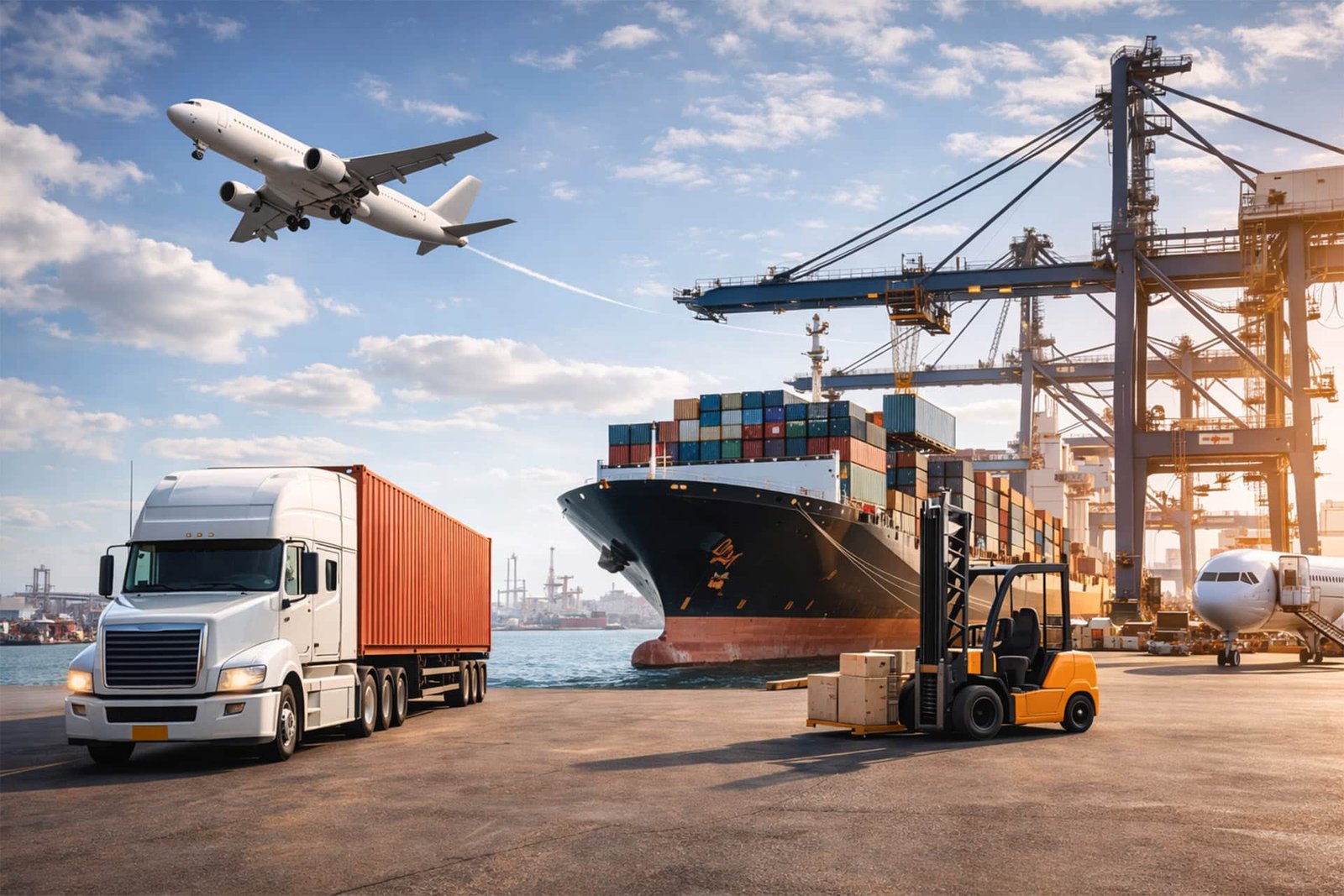
In the ocean vs air freight from Asia decision, ocean usually wins on cost and air wins on speed. Ocean takes about 20 to 45 days door to door; air takes about 5 to 9. Choose air when the cost of waiting, such as a stockout or stopped production line, exceeds the air premium.
Key takeaways
- Ocean freight from China to the U.S. West Coast takes about 20 to 32 days door to door, and 33 to 45 days to the East Coast. Air freight takes about 5 to 9 days.
- Container rates rose sharply in 2026: Drewry put Shanghai to Los Angeles at $7,838 per 40-foot container on September 24, 2026.
- Air freight is priced by chargeable weight, the greater of actual weight or volume weight, with 1 cubic meter counted as about 167 kg.
- U.S. duty is the same whichever mode you choose, but ocean imports also pay the 0.125% Harbor Maintenance Fee, which air shipments do not.
- Most importers use both modes: ocean for planned replenishment, and air for samples, urgent restocks, and time-critical components.
Every importer sourcing from Asia has faced this question. The shipment is ready, and the factory wants to hand it off. Do you put it on a vessel or book air cargo? This guide compares ocean vs air freight from Asia on transit time, 2026 costs, fees, and customs, then gives you a framework for making the right call on each shipment.
How long does ocean vs air freight from Asia take?
Ocean freight from Asia takes about 20 to 32 days door to door to the U.S. West Coast and 33 to 45 days to the East Coast. Air freight takes about 5 to 9 days door to door. Port-to-port quotes leave out origin trucking, customs clearance, and final delivery, so always plan on door-to-door times.
| Lane | Port-to-port / airport-to-airport | Door-to-door estimate |
|---|---|---|
| China to U.S. West Coast (LA/Long Beach) | 14-17 days (Shanghai, Ningbo); 16-20 days (Shenzhen, Guangzhou) | About 20-32 days |
| China to U.S. East Coast (New York, Savannah) via Panama | 26-32 days | About 33-45 days |
| Vietnam (Ho Chi Minh City) to Los Angeles | 20-25 days | About 26-37 days |
| Asia to U.S. by standard air freight | 3-5 days airport to airport | About 5-9 days |
| Asia to U.S. by express courier | Small shipments only | About 2-4 days |
For ocean freight, add about 3 to 5 days for origin trucking and loading and 3 to 7 days for customs clearance and drayage at destination. Southeast Asian lanes run slightly longer than direct China routes because some ports rely on feeder services. Blank sailings also stretch schedules: Drewry reported 15 transpacific-related blank sailings announced for the week after September 24, 2026, ahead of China's Golden Week holiday.
How much does ocean vs air freight cost in 2026?
In 2026, a 40-foot container from Shanghai to Los Angeles costs several thousand dollars, while air freight from Asia typically runs about $5 to $10 per kilogram. Per kilogram, air often costs 5 to 10 times more than LCL ocean freight and far more than a full container, so cargo weight and value decide which mode makes sense.
Sources: Drewry (2026), Air Cargo News (2026)
Ocean freight: FCL and LCL
FCL (full container load) is priced per container. Rates have climbed well above the $1,500 to $4,000 range many importers remember. According to Drewry's World Container Index, spot rates from Shanghai to Los Angeles reached $7,838 per 40-foot container on September 24, 2026, and Shanghai to New York was $10,373. Spread across a well-loaded container, that still works out to well under $1 per kilogram. Note that U.S. highway weight limits usually cap practical loads below a container's rated payload.
LCL (less than container load) is priced per cubic meter, plus destination handling charges. It suits shipments too small to fill a container, but those destination charges add up, so compare total cost against a small FCL on shipments of roughly 5 to 15 cubic meters.
Air freight: priced by chargeable weight
Air freight is priced per kilogram of chargeable weight, which is the greater of actual weight or volume weight. Under the standard air freight ratio, 1 cubic meter counts as about 167 kg, so light, bulky cargo gets expensive fast.
Rates move with fuel and season. TAC Index data reported by Air Cargo News put all-in rates from Hong Kong to North America near $5.70 per kg in March 2026. By September, the global Baltic Air Freight Index was up 20.9% from a year earlier, with jet fuel prices up 116.5%, according to Air Cargo News' September 2026 market report.
Express services from DHL, FedEx, and UPS cost considerably more per kilogram and should be reserved for small, genuinely time-critical shipments.
Fees and duties: what changes by mode
U.S. duty does not depend on the mode. It is based on the goods' value and HTS classification, not the international freight bill, so see how to read an HTS code if you need to confirm your rate. One government fee does differ: the Harbor Maintenance Fee of 0.125% of cargo value applies to ocean imports only, according to GingerControl's guide to U.S. customs fees. The Merchandise Processing Fee applies to both modes.
What does the math look like on a real shipment?
On a 500 kg shipment worth $50,000, air freight costs roughly $1,350 to $1,600 more than ocean once you count the ocean-only Harbor Maintenance Fee and the cost of carrying inventory for the extra weeks at sea. That gap is smaller than the freight quotes alone suggest, which is why landed cost comparisons matter.
This illustrative example assumes 3 cubic meters of cargo, which gives a chargeable weight of about 500 kg by air, and a 20% annual inventory carrying cost.
| Cost item | Ocean (LCL) | Air |
|---|---|---|
| Freight | $500-750 (LCL, illustrative) | About $2,850 (500 kg at $5.70/kg) |
| Harbor Maintenance Fee (0.125% of $50,000) | $62.50 | $0 |
| Extra inventory carrying cost (about 25 more days at 20% a year) | About $685 | $0 |
| Total of these costs | About $1,250-1,500 | About $2,850 |
| Door-to-door time | About 25-35 days | About 5-9 days |
Whether a premium of about $1,350 to $1,600 is worth paying depends on what 20 to 30 extra days in transit cost your business. If the shipment prevents a stockout on a high-margin product, air may pay for itself. If it is routine replenishment, ocean is the better choice.
When should you use ocean freight from Asia?
Use ocean freight when cargo is heavy relative to its value, when order cycles are predictable with enough lead time for four to six weeks in transit, and when you ship full or near-full container quantities. The savings from ocean freight are often large enough to fund the safety stock that covers the longer transit time.
High weight, lower value
Raw materials, heavy components, furniture, and machinery almost always belong on the water.
Predictable replenishment
Regular order cycles with enough lead time absorb ocean transit comfortably.
Full container quantities
When you can fill a container, FCL offers the lowest cost per unit.
Flexible arrival dates
Goods that are not time-sensitive don't justify an air premium.
When should you use air freight from Asia?
Use air freight when cargo is high value, low weight, and time-sensitive, when you need an urgent restock, or when missing a delivery date would cost more than the air premium. Samples, prototypes, and first orders from a new supplier are also strong candidates, because they are small and speed matters.
High value, low weight
Electronics components, medical devices, precision parts, and fashion samples fit this profile.
Urgent restocks
Use air when an ocean shipment is delayed or damaged, or inventory runs out faster than expected.
Samples and prototypes
These don't justify container space and need to move quickly.
Testing a new supplier
A small air order can prove quality before you commit to ocean volumes.
High cost of delay
If a stopped production line costs more than the air bill, air is the cheaper choice.
How do you choose between ocean and air freight? 5 steps
To choose between ocean and air freight, calculate chargeable weight and value density, price both modes as landed cost, put a dollar figure on delay, compare the air premium with that cost, and check cargo restrictions. This turns a gut call on mid-weight, mid-value cargo into a clear, repeatable decision.
There are five steps to choosing the right mode:
- Calculate chargeable weight and value density. Compare actual weight with volume weight, and divide cargo value by chargeable weight. High-value, light cargo leans toward air.
- Price both modes as landed cost. Include freight, destination charges, the ocean-only Harbor Maintenance Fee, and inventory carrying cost for the extra days in transit.
- Put a dollar figure on delay. Estimate what a late arrival costs: lost sales, a stopped line, missed seasonal windows, or penalties from your customers.
- Compare the premium with the cost of delay. If the air premium is smaller than the cost of waiting, air wins. If not, ocean wins, and safety stock may be the cheaper hedge.
- Check cargo restrictions and timing. Confirm dangerous goods rules, seasonal capacity such as Golden Week and Q4 peak, and that your customs broker knows the shipment is coming.
Landed cost modeling with your freight forwarder makes this concrete. For more ways to cut reactive air spend, see our guide to cutting supply chain costs without slowing delivery.
How do mixed-mode strategies work in practice?
Most importers who source from Asia regularly use both modes as tools for different jobs. Ocean freight handles planned replenishment on a regular cycle, while air freight covers samples and prototypes before production ramps and emergency restocks when inventory drops before the next vessel arrives.
Keep an air freight relationship in place even if you use it rarely. Setting one up during a supply emergency is slower and more expensive than having the capability ready. For some products, a third option is worth modeling: shifting some sourcing to Mexico, where cross-border trucking delivers in days without air freight rates.
What customs differences matter by mode?
Customs clearance works much the same for ocean and air: both need a commercial invoice, packing list, transport document, HTS classification, and duty payment. The differences are the advance security filing, entry timing, the ocean-only Harbor Maintenance Fee, and dangerous goods rules that restrict what can fly.
- Advance security filing. Ocean freight requires an Importer Security Filing at least 24 hours before cargo is loaded at the foreign port. Air freight uses CBP's Air Cargo Advance Screening program instead. See our ISF filing guide for the ocean requirements.
- Entry timing. Ocean transit gives your broker days to prepare the entry before arrival. Air cargo arrives fast, so tell your customs broker as soon as an air shipment is booked.
- Exams. CBP can examine cargo in either mode. If your product category carries elevated exam risk, build buffer time into air plans, where a hold eats a larger share of the timeline.
- Dangerous goods. Some cargo, including many lithium battery shipments, faces strict rules or bans by air, so confirm eligibility before booking.
How does Beyond Logix help you choose the right mode?
Beyond Logix handles both ocean and air freight from Asia, with licensed customs brokers in-house for clearance on either mode. We give you a landed cost comparison for both options on your specific trade lane and cargo, so the ocean vs air decision is based on numbers instead of habit.
Frequently asked questions
How long does ocean freight from China to the US take?
Port to port, ocean freight from major Chinese ports to the U.S. West Coast takes about 14 to 17 days, and East Coast routings via the Panama Canal take about 26 to 32 days. Including origin trucking, customs clearance, and destination drayage, plan on about 20 to 32 days to the West Coast and 33 to 45 days to the East Coast.
How long does air freight from China to the US take?
Standard air freight from China takes about 3 to 5 days airport to airport, including connections and handling. Door to door, with pickup, origin processing, customs clearance, and delivery, it typically runs 5 to 9 days. Express couriers can deliver small shipments in 2 to 4 days at a significant premium.
How much does air freight from Asia cost per kilogram?
General air freight from Asia to the U.S. often runs about $5 to $10 per kilogram all-in, depending on lane, carrier, and season. For reference, TAC Index data put all-in rates from Hong Kong to North America near $5.70 per kilogram in March 2026. Express courier rates run much higher.
How much more expensive is air freight than ocean freight?
It depends on what you compare. Against LCL ocean freight, air often costs about 5 to 10 times more per kilogram. Against a full container, the gap is much wider, because a loaded 40-foot container spreads its rate over thousands of kilograms. Always compare landed cost, not freight alone.
When is it worth paying for air freight from Asia?
Air freight pays off when the cost of delay exceeds the air premium. Production stoppages, stockouts on high-margin products, time-sensitive seasonal goods, and urgent samples or prototypes usually justify it. For heavy cargo and planned replenishment with enough lead time, ocean freight is almost always the better financial choice.
Can I mix ocean and air freight from the same supplier?
Yes. Many importers use ocean for planned replenishment and air for samples, urgent restocks, and time-critical components from the same suppliers. Setting up both modes with your logistics provider in advance lets you switch quickly without building a new relationship during an emergency.
Does air freight from Asia require customs clearance in the US?
Yes. Every commercial shipment entering the United States needs customs clearance, whatever the mode. Air freight moves on an air waybill instead of a bill of lading, and advance security data is filed through CBP's Air Cargo Advance Screening program instead of an ISF. Classification and duty payment work the same way.
What cargo can't be shipped by air?
Some cargo is restricted or prohibited by air under IATA Dangerous Goods Regulations, including many flammable liquids, compressed gases, and explosives. Lithium batteries can fly only under special packing and documentation rules. If your cargo includes any regulated material, confirm eligibility with your freight forwarder before booking.
Conclusion: let landed cost make the call
The ocean vs air freight from Asia decision comes down to one comparison: the air premium against the cost of waiting. Ocean wins for heavy, planned, lower-value cargo, and air wins for light, urgent, high-value shipments. With 2026 container rates elevated, run the landed cost math on every borderline shipment.
Get a rate quote, and we'll compare both modes on your lane before you book.
Sources
- World Container Index, Drewry, 2026
- Airfreight Rates Heading Back to Peak Season Levels, Air Cargo News, 2026
- Airfreight Rates Strong as Peak Season Approaches, Air Cargo News, 2026
- Customs Fees Explained, GingerControl, 2026