

What Is a Customs Broker?
For U.S. importers: what the license actually requires, what the job covers beyond paperwork, and who carries the legal risk when something goes wrong.
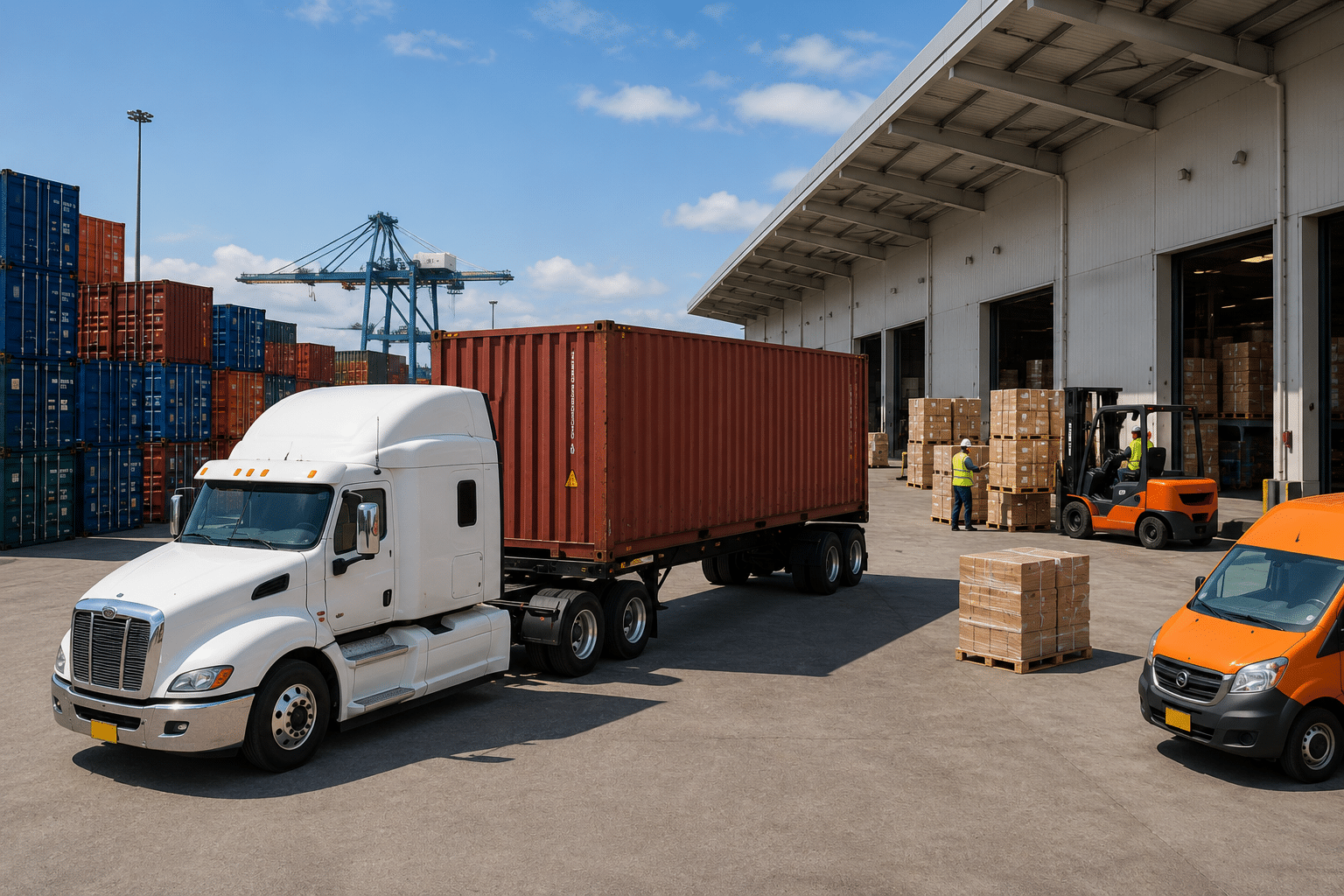
A customs broker is a professional or company licensed by U.S. Customs and Border Protection to clear imports on your behalf. Brokers classify goods, prepare and file entries, calculate and pay duties, file ISFs, and manage CBP exams. The importer of record stays legally responsible for accuracy.
Key takeaways
- A customs broker is licensed by U.S. Customs and Border Protection (CBP) to prepare and file customs entries for other parties. Importers may self-file only for their own goods.
- The license requires passing a CBP exam and a background check, then filing a triennial status report every three years with continuing education credits, or the license is revoked.
- Brokers do far more than paperwork: HTS classification, entry filing, duty payment, ISF filing, exam coordination, and duty recovery through drawback and refunds.
- The importer of record keeps legal responsibility. If a broker's error underpays duties, CBP assesses back duties and penalties against the importer, not the broker.
- Freight forwarders and customs brokers serve different functions and hold different licenses. Some companies, like Beyond Logix, offer both under one team.
Most U.S. importers encounter the phrase "customs broker" while planning their first shipment. A few searches later, they know it involves customs paperwork, but the actual scope of the role stays fuzzy. This guide answers what is a customs broker, what the job involves, why it requires a federal license, and what the broker-importer relationship really looks like.
What is a customs broker?
A customs broker is a private professional or company licensed by U.S. Customs and Border Protection to prepare and submit import documentation on behalf of importers and exporters. The broker acts as the licensed intermediary between the importing business and the U.S. government at the border.
The operative word is licensed. CBP does not allow just anyone to file customs entries for another party. Brokers must pass a demanding written exam administered by CBP and clear a federal background check. The barrier is intentional: the work involves filing legal declarations for importers, with federal enforcement consequences if those declarations are wrong.
What does a customs broker do?
A customs broker handles the full customs clearance process: classifying goods under the HTS, preparing and filing the entry, calculating and paying duties, filing the ISF for ocean freight, checking every tariff layer, coordinating CBP exams, and recovering duties through drawback, protests, and refunds. On a typical ocean import, the broker is involved from before loading until well after delivery.
HTS classification
Every product entering the United States must be classified under the Harmonized Tariff Schedule, a 10-digit code that sets the duty rate, any additional tariffs, and whether special programs or restrictions apply. The wrong code can mean underpaying duties, which creates penalty exposure, or overpaying them. Classification requires knowledge of the product, the schedule, CBP rulings, and how CBP interprets ambiguous categories. It is not a lookup exercise. For the details, see how to read an HTS code.
Customs entry preparation and filing
The broker prepares the commercial invoice, packing list, bill of lading, and entry summary, which declares the HTS classification, country of origin, dutiable value, and duties owed. It checks that the information is consistent across documents and submits the entry through CBP's Automated Commercial Environment (ACE). CBP then releases the cargo or holds it for examination.
ISF filing
For ocean shipments, the broker files the Importer Security Filing, also called 10+2, at least 24 hours before cargo is loaded at the foreign port. A late, incomplete, or inaccurate ISF can bring $5,000 in liquidated damages per violation. See our ISF filing guide for the full breakdown.
Duty payment and liquidation
The broker collects estimated duties from the importer and remits them to CBP. CBP then liquidates the entry, typically about 314 days after entry, either confirming the amount or billing for any difference.
Checking every tariff layer
In 2026, a correct HTS code is only the start. Brokers must also report additional tariffs such as Section 301 and Section 232 with separate Chapter 99 numbers, and supply data such as metal content and origin where rules require it. Missing a layer is now one of the most expensive mistakes on an entry.
CBP exam coordination
CBP selects some shipments for examination, ranging from a document review to a full container unload. When that happens, the broker coordinates with the port, the exam facility, and the importer. A good broker tells you immediately, explains what triggered the exam if known, estimates the timeline and cost, and manages the release.
Duty recovery
Brokers also help importers get money back. Drawback refunds 99% of certain duties, taxes, and fees on imported goods that are later exported or destroyed, according to CBP's drawback ruling guidance. In 2026, brokers also file refund declarations for the struck-down IEEPA tariffs through CBP's CAPE process, where deadlines run as short as 90 days from liquidation, according to GHY International's CAPE tracker. For more recovery options, see how to reduce supply chain costs.
Source: U.S. Customs and Border Protection (2026)
What does the customs clearance timeline look like?
On an ocean import, customs deadlines start before the cargo leaves Asia and can run for more than a year after it arrives. The ISF comes first, then entry filing within 15 days of arrival, the entry summary and duty deposit within 10 working days of release, liquidation months later, and a 180-day protest window after that.
| When | What the broker does | Why it matters |
|---|---|---|
| At least 24 hours before loading (ocean) | File the Importer Security Filing (ISF) | Late or inaccurate filings risk $5,000 liquidated damages |
| Before arrival | Prepare and, where allowed, pre-file the entry | Faster release when cargo lands |
| Within 15 calendar days of arrival | File entry documents to obtain release | Late entry can send cargo to general order storage |
| Within 10 working days of release | File the entry summary and deposit estimated duties | Sets the classification, value, and duty on record |
| About 314 days after entry | CBP liquidates the entry | Duty amount becomes final, or CBP bills the difference |
| Within 180 days of liquidation | File a protest if duties were overpaid | Last chance to recover most overpayments |
A broker who tracks these dates for you protects both your cargo flow and your ability to recover overpaid duties.
Why does the customs broker license matter?
The license matters because only a licensed customs broker can conduct customs business on behalf of another party. A freight forwarder without licensed brokers cannot legally clear customs for its clients, and if an unlicensed party files anyway, the importer carries the legal exposure. Keeping a license also requires ongoing continuing education.
Brokers don't simply renew a license on a calendar. Every three years, each licensed broker must file a triennial status report with CBP and certify continuing education credits. According to CBP's triennial status report page, brokers must certify 20 hours of continuing education for the 2024-2027 cycle, file with a $100 fee, and risk license revocation if they miss the deadline. From the next cycle, the requirement rises to 36 hours.
Ask any logistics provider whether it has licensed customs brokers on staff or outsources clearance. If it outsources, you have two vendors and no single party accountable for both logistics and customs.
Who is legally responsible for customs compliance?
The importer of record is legally responsible for customs compliance, even when a broker does the filing. When you hire a customs broker, you delegate the work, not the legal responsibility. If a broker's error underpays duties, CBP can assess back duties, interest, and penalties against you, not the broker.
Importers must use reasonable care, and penalties scale with culpability. Under 19 U.S.C. 1592, negligent violations can bring penalties of up to two times the lost duties, and gross negligence up to four times. That is why choosing a broker is not a compliance offload. Asking about error rates, review processes, and how mistakes are handled is not paranoid. It is due diligence.
Customs broker vs freight forwarder vs NVOCC: what's the difference?
A customs broker clears goods through U.S. Customs, a freight forwarder arranges transportation, and an NVOCC acts as a carrier for ocean freight. Each role has its own license and responsibilities. Many companies offer more than one, but a provider can only clear customs if it has licensed customs brokers.
| Factor | Customs broker | Freight forwarder | NVOCC |
|---|---|---|---|
| Main job | Clears goods through U.S. Customs | Arranges transportation | Acts as a carrier for ocean freight |
| Licensed by | CBP | FMC (for ocean freight forwarding) | FMC |
| Files customs entries for others | Yes | Only with licensed brokers on staff | Only with licensed brokers on staff |
| Issues its own ocean bill of lading | No | No | Yes, a house bill of lading |
For a closer look at the carrier side, see NVOCC vs freight forwarder.
Do you need a customs broker?
You are not legally required to use a customs broker, because importers can self-file entries for their own goods. In practice, most businesses need one. HTS classification, strict filing deadlines, ISF rules, and layered 2026 tariffs make self-filing impractical for anyone who imports more than occasionally.
Low-value shipments need more attention than they used to. Duty-free de minimis treatment for shipments of $800 or less remains suspended for all countries, as explained in the Federal Register notice on the de minimis suspension, so those shipments now need proper entries and duty payments too.
How to choose a customs broker: 6 steps
To choose a customs broker, verify the license, check experience with your products, confirm ISF filing and tariff-layer checks are in-house, ask about duty recovery, check how the broker works with your freight, and test how it communicates about exams. These six checks reveal whether a broker manages risk or just files paperwork.
There are six steps to choosing a customs broker:
- Verify the license. Confirm the broker's license is active with CBP. An expired or suspended license is disqualifying.
- Check product experience. Ask which product categories the broker handles regularly. Classification varies enormously by industry, and familiarity reduces errors.
- Ask about ISF and tariff layers. Confirm ISF filing is in-house, and ask how the broker checks Section 301, Section 232, and other layers for each HTS code and origin.
- Ask about duty recovery. Ask whether the broker files drawback claims, protests, and IEEPA refund declarations, and how it tracks the deadlines.
- Check integration with your freight. Ask whether the broker works with your freight forwarder or is part of the same team. The gap between the two is a common source of delays.
- Test their exam communication. Ask: if a shipment is selected for a CBP exam, how will I find out, and what happens next?
How does Beyond Logix handle customs brokerage?
Beyond Logix employs licensed customs brokers in-house and handles freight forwarding and customs clearance under one roof. The team that knows your cargo is on the water is the same team processing your customs entry, so there are no handoffs, no gaps, and one point of accountability.
Our brokers handle customs clearance, ISF filing, duty drawback, bond renewal, and customs consultation for importers across every product category. We review HTS classifications for every new client and monitor changes that affect existing accounts.
Frequently asked questions
What does a customs broker do?
A customs broker prepares and files import documentation with CBP on behalf of an importer. The work includes HTS classification, preparing and filing the customs entry, ISF filing for ocean shipments, calculating and paying duties, coordinating CBP exams, and recovering duties through drawback, protests, or refunds. The broker is the licensed link between the importer and U.S. Customs.
Does every importer need a customs broker?
No, but most use one. An importer can legally self-file customs entries for its own goods without a broker. In practice, HTS classification, entry deadlines, ISF rules, and layered tariffs make self-filing impractical for most businesses, so any company that imports more than occasionally benefits from a licensed broker.
How much does a customs broker charge?
Fees vary by broker and scope. Common charges include a per-entry fee, an ISF filing fee, a customs bond, and extra charges for services such as exam coordination or additional HTS lines. Some brokers bundle these into a per-shipment rate. Compare quotes on a total-per-shipment basis, not the entry fee alone.
What is the difference between a customs broker and a freight forwarder?
A freight forwarder arranges the transportation of your cargo, while a customs broker clears that cargo through U.S. Customs. A customs broker must be licensed by CBP. An ocean freight forwarder is licensed by the Federal Maritime Commission, but it cannot clear customs for you unless it also has licensed customs brokers on staff.
Who is legally responsible if a customs broker makes an error?
The importer of record. It stays legally responsible for accurate declarations and correct duties, even when a licensed broker prepares the entry. If an error underpays duties, CBP can collect back duties and interest and assess penalties against the importer, which makes choosing an accurate broker a risk management decision.
How do I verify that a customs broker is licensed?
Check the broker's license status with CBP before you engage them, and ask for the license number and the name of the licensed individual or company. An active license means it is current and not suspended or revoked. Since 2024, brokers must also keep up with CBP's continuing education requirement to keep their licenses.
What happens if my shipment gets held at customs?
CBP can hold cargo for a document review, a physical exam, or both. Your broker should tell you immediately, explain the reason if known, coordinate with the exam facility, and manage the release. Holds can add several days to delivery and create storage and exam fees while the cargo waits.
What is the difference between informal and formal customs entries?
Informal entries generally cover commercial shipments valued under $2,500 and have simpler documentation. Formal entries cover shipments of $2,500 or more and require a customs bond, full HTS classification, and an entry summary filed through ACE. Some goods need formal entry regardless of value, and most commercial shipments exceed $2,500.
Conclusion: delegate the work, not the risk
A customs broker is the licensed professional who clears your goods through U.S. Customs, from classification and entry filing to duty payment, exams, and recovery. You can hand over the work, but the importer of record keeps the legal responsibility, so choose a broker whose accuracy and communication you can trust.
If you import into the United States and don't have a licensed customs broker you trust, talk to the team at Beyond Logix.
Sources
- Drawback Ruling H292472, U.S. Customs and Border Protection, 2026
- CBP Launches CAPE for IEEPA Duty Refunds, GHY International, 2026
- Customs Broker Triennial Status Report (TSR) and Continuing Education (CE) Requirements, U.S. Customs and Border Protection, 2026
- 19 U.S.C. 1592 - Penalties for Fraud, Gross Negligence, and Negligence, OpenJurist
- Indefinite Suspension of the De Minimis Exemption for Mail Shipments and New Postal Informal Entry, Federal Register (U.S. Customs and Border Protection), 2026