

How to Read an HTS Code: Step-by-Step for Importers
For import compliance teams: how the 10-digit code works, how to find the right one, and what a misclassification actually costs.
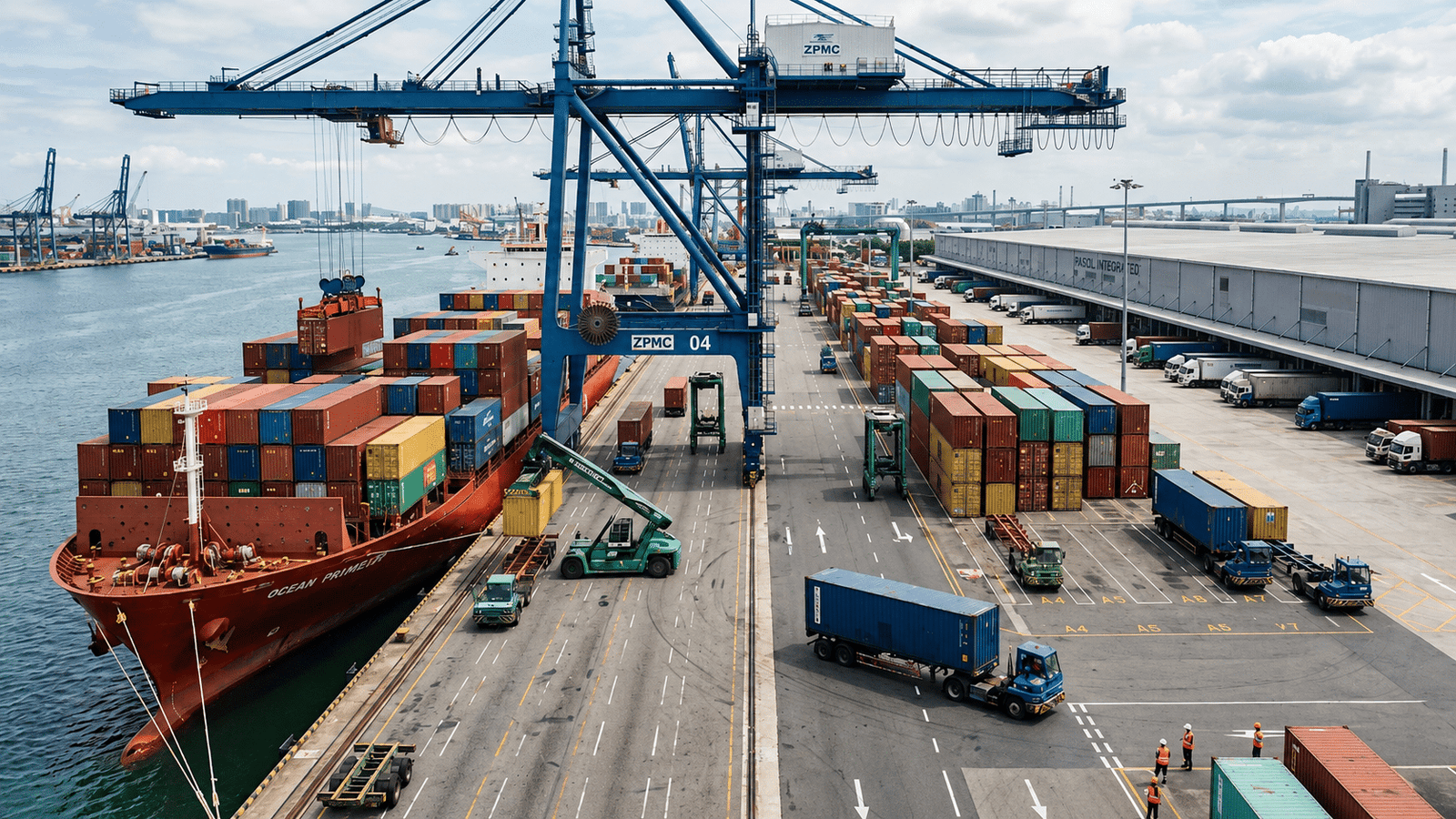
Here is how to read an HTS code: split its 10 digits into five parts: chapter (digits 1-2), heading (3-4), subheading (5-6), U.S. rate line (7-8), and statistical suffix (9-10). The first six digits are international. The last four are U.S.-specific, and the eight-digit line sets your base duty rate.
Key takeaways
- An HTS code is the 10-digit number that tells U.S. Customs how to classify an imported product and which duty rate applies.
- The first six digits come from the international Harmonized System, which more than 200 countries and economies use. Digits 7 through 10 are U.S.-specific.
- Additional tariffs such as Section 301 and Section 232 are tied to your HTS code and reported on the entry with separate Chapter 99 numbers.
- HTS classification is a legal declaration. Negligent errors can bring penalties of up to two times the lost duties, and gross negligence up to four times.
- The U.S. schedule changes far more than once a year: USITC had published 17 revisions of the 2026 HTS by August 24, 2026.
Every product imported into the United States is assigned a 10-digit HTS code. That number decides how much duty you pay, whether additional tariffs apply, and whether your goods trigger special import requirements. This guide explains how to read an HTS code, find the right one, and understand what is at stake.
What is an HTS code?
An HTS code is the 10-digit number U.S. Customs uses to classify an imported product and set its duty rate. It comes from the Harmonized Tariff Schedule of the United States (HTSUS), which the U.S. International Trade Commission maintains and publishes free online at hts.usitc.gov.
The HTSUS is built on the Harmonized System (HS), an international classification standard maintained by the World Customs Organization. According to the WCO's HS 2028 announcement, the HS underpins customs tariffs and trade statistics worldwide. The HS supplies the first six digits of every code, which are shared internationally. The United States adds digits 7 through 10, and that is where the U.S. duty rate and statistical reporting live.
Sources: World Customs Organization (2026), USITC (2026)
How to read an HTS code: the 10 digits explained
Read an HTS code from left to right, from broad to specific. Digits 1-2 name the chapter, 3-4 the heading, and 5-6 the subheading, which completes the international HS code. Digits 7-8 are the U.S. rate line that sets the base duty, and digits 9-10 are a statistical suffix.
Here is how the code for a laptop, 8471.30.0100, breaks down:
| Digits | Level | Example | What it means |
|---|---|---|---|
| 1-2 | Chapter | 84 | Machinery and mechanical appliances; parts thereof |
| 3-4 | Heading | 8471 | Automatic data processing machines and units thereof |
| 5-6 | Subheading (end of HS code) | 8471.30 | Portable machines weighing not more than 10 kg |
| 7-8 | U.S. tariff rate line | 8471.30.01 | Sets the base U.S. duty rate (Free for this line) |
| 9-10 | Statistical suffix | 8471.30.0100 | Census reporting only; does not change the rate |
Digits 1-2: Chapter
The chapter is the broadest level. Chapter 84 covers nuclear reactors, boilers, machinery, and mechanical appliances, and parts thereof. The HTSUS is organized into chapters grouped into sections, and the chapter tells you which part of the schedule you are working in.
Digits 3-4: Heading
The four-digit heading narrows the category. Heading 8471 covers automatic data processing machines and units thereof, which is where computers sit.
Digits 5-6: Subheading
The six-digit subheading adds specificity. Subheading 8471.30 covers portable automatic data processing machines weighing not more than 10 kg. These six digits are the HS code your overseas supplier uses on its export declaration.
Digits 7-8: U.S. tariff rate line
Digits 7 and 8 are the first U.S.-specific level, and this is where the base duty rate appears. Rates are usually a percentage of customs value (ad valorem), and sometimes a specific amount per unit. For 8471.30.01, the general rate is Free.
Digits 9-10: Statistical suffix
The last two digits are a statistical suffix used for trade data. They do not change the duty rate, but they are required on the entry. The full 10-digit code is what appears on your customs entry.
How do additional tariffs stack on an HTS code?
Additional tariffs stack on top of the base HTS rate, and most of them are assigned by HTS code and country of origin. Section 301 duties on Chinese goods, the 2026 forced-labor Section 301 tariffs, and Section 232 duties each have their own coverage lists, and each is reported on the entry with a separate Chapter 99 number.
The laptop example shows why you must check every layer. A common assumption is that Chinese laptops pay 25% under Section 301 List 3. They don't. According to C.H. Robinson's Section 301 guide, List 4A goods pay 7.5% and List 4B was suspended, and laptops under 8471.30 sit on that suspended list, so they carry no List 1 to 4A duty.
Laptops are not automatically duty-free, though. Since July 24, 2026, the USTR forced-labor Section 301 action has added 10% or 12.5% on products of 60 economies, subject to product exemptions [VERIFY whether 8471.30 is exempt for your origin].
Section 232 works the same way. Coverage for steel, aluminum, and copper derivatives is listed by HTS code, and since April 6, 2026, those duties apply to the full customs value of covered products. A product that looks low-duty at its base rate can carry large exposure through these layers. For a program-by-program view, see our full breakdown of current U.S. tariff programs.
How to find the right HTS code: 6 steps
To find the right HTS code, describe the product precisely, apply the General Rules of Interpretation, read heading text and notes as legal text, search CBP rulings, and then check the tariff layers for your code and origin. Classification follows the schedule's legal text and notes, not what a product looks like or what the supplier calls it.
There are six steps to finding the right HTS code:
- Describe the product precisely. Write down what it is, what it is made of, how it works, and what it is used for. These facts drive almost every classification.
- Apply the General Rules of Interpretation. Classify by the terms of the headings and the Section and Chapter Notes first (GRI 1). Use rules such as essential character only when the headings alone don't settle it.
- Read heading and subheading text as legal text. Terms like portable, electric, or parts have specific meanings in the schedule. Marketing language does not.
- Check the Section and Chapter Notes. Notes are legally binding and can include or exclude products from a heading, overriding intuitive assumptions.
- Search CBP rulings in CROSS. Look for rulings on similar products at rulings.cbp.gov. A ruling on another importer's goods is not binding for you, but it is strong guidance.
- Check the tariff layers for your code and origin. Confirm the base rate, then check Section 301, Section 232, and other programs that apply to that HTS code and country of origin.
The schedule itself is free at hts.usitc.gov, and paid databases add classification guidance. For new or high-value products, a licensed customs broker's review is the safest route.
What are the most common HTS classification mistakes?
The most common HTS classification mistakes are using the supplier's code without checking it, classifying by appearance or marketing description, missing a subheading distinction, ignoring Section and Chapter Notes, and checking only the base rate while ignoring the tariff layers tied to the code.
Trusting the supplier's code
Suppliers' export codes reflect their own country's classification, not always the correct U.S. one.
Classifying by appearance
What a product looks like or what the catalog calls it does not control. The heading text and notes do.
Assuming accessories follow the product
A laptop's power adapter is not classified with the laptop under 8471; it falls under its own heading.
Missing a subheading distinction
Similar products can diverge sharply at the subheading level, one Free and the next dutiable.
Checking only the base rate
The base rate may be Free while Section 301 or 232 layers on the same code add substantial duty.
What happens if your HTS code is wrong?
A wrong HTS code costs money in both directions. If it understates duty, CBP can collect the difference plus interest and add penalties based on how careless the error was. If it overstates duty, you have overpaid and must file a protest within 180 days of liquidation to get the money back.
Penalties scale with culpability. Under 19 U.S.C. 1592, the maximum civil penalties for errors that cost the government duties are:
| Culpability | What it means | Maximum civil penalty |
|---|---|---|
| Negligence | Failure to use reasonable care | Lesser of 2x lost duties or the domestic value of the goods |
| Gross negligence | Reckless disregard of the facts or the law | Lesser of 4x lost duties or the domestic value of the goods |
| Fraud | Knowing, intentional false statement | Up to the domestic value of the goods |
These penalties are on top of the unpaid duties. Repeated errors on the same product can push a case from negligence toward gross negligence, which is why a pattern of mistakes is more dangerous than a single one. Overpayments deserve the same attention: duties overpaid and not protested in time are gone. For other ways to recover duties, see our guide to recovering overpaid duties through refunds and drawback.
When should you request a CBP binding ruling?
Request a CBP binding ruling when classification is genuinely ambiguous, when a product falls between two headings with very different duty rates, or before importing a new product at volume. A binding ruling commits CBP to a specific classification for the product you describe, giving you certainty before duties add up.
Rulings are requested through CBP's eRulings system with a detailed product description and supporting documents. Classification rulings are generally issued in about 30 days, though complex requests take longer. Rulings apply to future entries, not past ones, and only to the product as described, so they suit stable products you will import repeatedly rather than one-time shipments.
How often do HTS codes change?
HTS codes change many times a year. The HTSUS starts each year with a basic edition and is then revised whenever tariff actions, trade agreements, or statistical changes take effect. The international HS is also revised periodically, and the next edition takes effect on January 1, 2028.
The pace in 2026 has been unusually fast. The USITC HTS archive lists 17 revisions of the 2026 schedule through August 24, 2026. Looking ahead, the WCO reports that HS 2028 includes 299 sets of amendments, so many U.S. codes will change on January 1, 2028. Products classified under one code for years may need reclassification.
How does Beyond Logix handle HTS classification?
Beyond Logix handles HTS classification as part of every customs brokerage relationship. We review classifications when a client onboards, check every additional tariff layer tied to each code and country of origin, and monitor schedule revisions that affect existing codes, so problems are caught before they reach an entry.
If you are unsure whether your current HTS codes are correct, or you are adding a product line and want a review before the first shipment, our team can help. If tariff changes keep reshaping your costs, see our guide to choosing a logistics partner that can absorb 2026's tariff swings.
Frequently asked questions
What is an HTS code?
An HTS code is a 10-digit number that U.S. Customs and Border Protection uses to classify imported goods. It determines the base duty rate, whether additional tariffs such as Section 301 or Section 232 apply, and whether special import requirements are triggered. HTS stands for Harmonized Tariff Schedule, the U.S. version of the international Harmonized System.
Where do I look up an HTS code?
The official Harmonized Tariff Schedule of the United States is published free by the U.S. International Trade Commission at hts.usitc.gov. CBP classification rulings are searchable free in the CROSS database at rulings.cbp.gov. Many customs brokers also provide classification reviews as part of their service.
What is the difference between an HTS code and an HS code?
The HS code is the six-digit international standard maintained by the World Customs Organization and shared by more than 200 countries and economies. The HTS code is the U.S. version, which extends the six-digit HS code to ten digits with a U.S. tariff rate line and a statistical suffix. U.S. entries use the full ten digits.
Can I use my supplier's HS code for U.S. import?
Not without verifying it. Your supplier's code reflects its own country's export classification, which may differ from the correct U.S. import classification because the U.S. schedule has its own subheadings and notes. Relying on the supplier's code without checking it against the HTSUS is one of the most common sources of classification errors.
What happens if my HTS code is wrong?
If the code understates your duty, CBP can collect the unpaid duties plus interest and assess penalties of up to two times the lost duties for negligence or four times for gross negligence. If the code overstates your duty, you can recover the overpayment through a CBP protest filed within 180 days of liquidation.
How does the HTS code affect Section 301 tariffs?
Section 301 tariffs on Chinese goods apply by HTS code. Lists 1, 2, and 3 generally carry 25%, List 4A carries 7.5%, and List 4B is suspended, so some products, including laptops, carry no List 1 to 4A duty. The 2026 forced-labor Section 301 tariffs add a separate layer by country of origin.
How often do HTS codes change?
The U.S. schedule changes many times a year, not just on January 1. USITC had published 17 revisions of the 2026 HTS by late August 2026. The international HS also changes periodically, and the next edition, HS 2028, takes effect on January 1, 2028, which will trigger broad U.S. code changes.
Does my customs broker handle HTS classification?
A licensed customs broker classifies goods as part of filing your entry, but the depth of that review varies by broker and product. At Beyond Logix, we review HTS classifications for every new client, check the additional tariff layers for each code and origin, and monitor schedule changes that affect your existing codes.
Conclusion: read the whole code, then every layer
Knowing how to read an HTS code comes down to five parts: chapter, heading, subheading, U.S. rate line, and statistical suffix. The harder part is choosing the right code and checking every tariff layer tied to it, because classification is a legal declaration and there is no "close enough."
Talk to our customs brokerage team about a classification review before your next shipment.
Sources
- HS Nomenclature 2028 Edition: Amendments Effective From 1 January 2028, World Customs Organization, 2026
- Section 301 China Tariff Guide, C.H. Robinson, 2026
- Fact Sheet: USTR Section 301 Action in Response to Failure of 60 Economies to Ban Imports Produced With Forced Labor, Office of the U.S. Trade Representative, 2026
- 19 U.S.C. 1592 - Penalties for Fraud, Gross Negligence, and Negligence, OpenJurist
- Harmonized Tariff Schedule Archive, U.S. International Trade Commission, 2026